


Working Cat Parents’ Guide: How to Choose Cat Food Scientifically
Learn how busy cat owners can choose cat food more confidently by understanding food types, nutrition labels, ingredient quality, processing methods, feeding routines, and each cat’s individual needs. This guide explains how to compare dry, baked, wet, and freeze-dried cat food in a practical, science-based way.
Practical Nutrition Tips for Busy Cat Owners
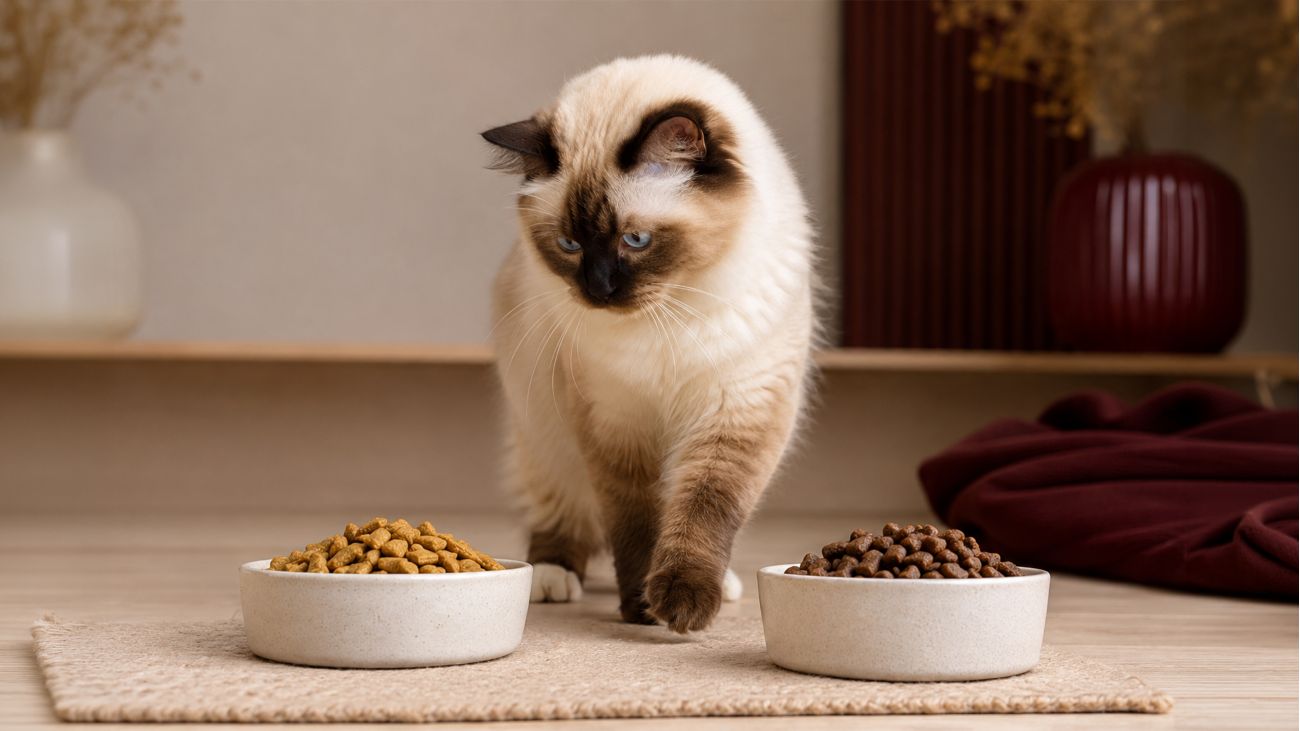
Choosing Cat Food with Confidence
For busy cat owners, choosing the right cat food can feel overwhelming. Store shelves and online shops are full of different formulas, claims, textures, ingredients, and price ranges. Some products focus on high protein, others highlight grain-free recipes, baked processing, freeze-dried ingredients, urinary support, sensitive digestion, or premium meat content.
With so many options, it is easy to choose based on packaging or trends instead of real nutritional value. A scientific approach does not mean making feeding complicated. It simply means understanding your cat’s natural needs, reading key product information carefully, and selecting food that fits your cat’s age, health, lifestyle, and daily routine.
Cats are obligate carnivores, which means they need animal-based nutrients to support normal body function. The best cat food choice should provide balanced nutrition, safe ingredients, good digestibility, suitable fat levels, enough essential nutrients, and a texture your cat will accept consistently.
Start by Understanding the Main Cat Food Types
Before comparing labels, it helps to understand the most common types of cat food. Dry extruded cat food is one of the most widely used options because it is convenient, easy to store, and suitable for daily feeding. It is produced under heat and pressure, which helps shape the kibble and support product safety. For working cat parents, dry food can be practical because it has a longer shelf life and does not require complicated storage.
Baked cat food is often positioned as a more premium option. It is usually made with a slower baking process, which may help protect texture and ingredient character while creating a lighter, less greasy kibble. Many baked formulas focus on higher protein and lower starch concepts, making them attractive for owners who want a more nutrition-focused dry food option.
Freeze-dried cat food is another popular category. It is made by removing moisture at low temperatures, helping preserve the original taste and aroma of ingredients. It can be used as a topper, treat, supplement, travel option, or part of a feeding plan. However, it is usually more expensive and may not always be practical as the only daily food for every household.
Read the Nutrition Label Carefully
The nutrition label is one of the most useful tools for choosing cat food scientifically. Instead of focusing only on marketing words, look at the nutritional information and ingredient list. Crude protein, crude fat, fiber, moisture, and key nutrients can tell you much more than a front-label claim.
Protein is especially important for cats. A good cat food should provide enough quality protein from suitable animal sources. Fat is also important because it supports energy, skin, coat condition, and palatability, but excessive fat may contribute to weight gain in less active cats.
Carbohydrate and starch levels are also worth considering. Cats do not need large amounts of starch in the same way some other animals do. While some starch may be used for kibble structure, formulas with too much starch may not be ideal for every cat, especially those prone to weight gain.
Also check for essential nutrients such as taurine, vitamins, minerals, and other components that support complete and balanced nutrition. If the food is used as a daily diet, it should be designed to meet cats’ nutritional needs rather than simply look attractive on the label.
Look at Ingredient Quality and Transparency
Ingredient quality plays a major role in how well a cat food performs. A clear ingredient list helps owners understand what they are feeding. Animal protein sources, named meats, quality fats, and functional ingredients are easier to evaluate than vague or unclear descriptions.
When possible, choose brands that provide transparent information about ingredients, manufacturing standards, quality control, and product purpose. This does not mean every product must be the most expensive option, but it should be clear what the food is made from and why those ingredients are included.
Avoid choosing food only because it uses bold claims such as “high meat” or “natural” without explaining the complete formula. A cat food recipe must be balanced. Meat content, minerals, fat, fiber, moisture, and functional nutrients all need to work together to support safe and consistent feeding.
Match the Food to Your Cat’s Individual Needs
No single cat food is perfect for every cat. Age, weight, activity level, digestion, health condition, and taste preference all matter. Kittens need energy-dense nutrition for growth, while senior cats may need food that is easier to chew and digest. Indoor cats may need careful calorie control, while active cats may require more energy.
Cats with sensitive digestion may benefit from simpler formulas, carefully selected proteins, or recipes designed for digestive support. Cats with skin and coat concerns may need formulas that include suitable fats and omega fatty acids. Overweight cats usually need controlled fat and calorie levels rather than rich, high-energy foods.
The best choice is the one that fits your cat’s real condition. Watch your cat’s appetite, stool quality, coat condition, energy, body weight, and overall comfort after changing food. These everyday signs can help you understand whether the formula is suitable.
Avoid Common Cat Food Selection Mistakes
One common mistake is choosing the richest-looking formula without considering balance. A product that looks high in meat or high in fat may seem attractive, but it may not be ideal if the mineral balance, digestibility, or calorie level is not suitable for your cat.
Another mistake is switching food too quickly. Cats can be sensitive to sudden diet changes, so transitions should usually be gradual. Mixing the new food with the old food over several days can help reduce digestive discomfort and improve acceptance.
It is also important not to rely only on price. Expensive food is not automatically the best food, and affordable food is not automatically poor quality. The better approach is to evaluate the formula, label transparency, quality control, suitability, and how your cat responds to the product.
Build a Practical Feeding Routine
For working cat parents, a practical feeding routine is essential. Choose food that fits your schedule while still supporting your cat’s health. Dry food may be convenient for measured daily feeding, wet food can help increase moisture intake, and freeze-dried toppers or treats can add variety when used appropriately.
Always measure portions based on your cat’s weight, age, activity level, and body condition. Overfeeding is one of the most common problems in indoor cats. Even high-quality food can lead to weight gain if portions are not controlled.
Fresh water should always be available. If your cat drinks very little, adding wet food or rehydrated freeze-dried food may help support moisture intake. Regular veterinary checkups are also important, especially if your cat has weight changes, digestive issues, urinary concerns, or chronic health conditions.
Choose Food with Science, Not Stress
Choosing cat food scientifically does not mean you need to become a nutrition expert. It means paying attention to the most important factors: balanced nutrition, safe ingredients, suitable processing, clear labeling, quality control, and your cat’s individual needs.
For busy cat owners, the goal is to make confident, informed choices without being overwhelmed by marketing claims. When you understand the main food types, read labels carefully, choose transparent brands, and observe your cat’s response, it becomes much easier to find food that supports long-term health and daily well-being.
A thoughtful feeding choice is one of the simplest ways to care for your cat every day, even during the busiest weeks.

Learn what a pet food OEM manufacturer actually does, from product formulation and ingredient sourcing to production, packaging, quality control, documentation, and private label support. This guide explains how OEM manufacturing helps pet food brands develop safe, nutritious, consistent, and market-ready products without building their own factory.

Learn what quality control really means in cat food production, from ingredient sourcing and raw material testing to clean manufacturing, laboratory checks, packaging, storage, and traceability. This guide helps cat owners better understand how safe, consistent, and reliable cat food is made before it reaches their pets.
Learn how OEM capacity planning helps pet food brands organize production, manage demand, reduce delays, control costs, and build a more reliable supply chain. This guide explains how Nuzoko supports cat food and dog food projects through structured planning, flexible OEM / ODM cooperation, quality control, and scalable manufacturing support.